The Institute of Entropology
Independent research on the physics of information, resources and society.
The Institute of Entropology is a private research institute founded by three physicists in 2026 whose work spans neuroscience, stochastic thermodynamics, dynamical systems, and machine learning. We study complex systems that process information: brains, ecosystems, machines, and social systems such as economies. Our starting conviction is that entropy is what makes these systems commensurable, and that a shared entropic accounting is the missing common language between the sciences that describe them.
Why entropy
Physics learned entropy twice, once as a measure of heat and irreversibility and once as a measure of information. Over the last three decades, stochastic thermodynamics has established the exchange rate between the two. Every act of measurement, computation, memory, and control carries a thermodynamic price, and every process that holds a system in an ordered state pays for that order with energy dissipation somewhere else. This gives us a single ledger in which computation, energy, materials, and emissions can be entered in comparable terms. Both meanings of entropy bear directly on the two largest challenges of our time: the climate crisis and the arrival of AI.
The stakes of that ledger are easy to see. A human brain learns continuously, controls a body, and maintains a model of the world on roughly twenty watts. The machine learning systems now being deployed to do a narrower version of that work consume many orders of magnitude more, and the infrastructure built to run them is already reshaping electricity grids, land use, and water budgets. How much information processing a given quantity of free energy can buy is now an industrial and political question.
Why now
Automation, computation, and AI have delivered remarkable technical progress alongside a widespread sense of insecurity: flat prospects, rising inequality, fear of losing one’s work, and a politics increasingly organised around that fear. At the same time, growth pursued without explicit accounting for resource depletion and emissions continues to shift risk onto the future.
Clean energy and recycling are usually offered as the way out. We take those technologies seriously. But their arrival cannot be scheduled, and efficiency gains have a long history of being absorbed by the demand they unlock. The rebound effect is a feedback loop, and feedback loops are precisely the kind of object that intuition handles badly and dynamical modelling handles well. The same holds for the introduction of AI into working life, which can raise measured productivity while leaving a workforce that is overloaded, financially precarious, and ultimately less capable, and for the current build-out of data centres, which adds ecological and social strain to a system already carrying both.
We want these technologies to succeed. That requires measuring what they actually do to the whole system they enter, including the parts that never appear on a balance sheet.
What we do
We put science to work on the problems that most need it. Informed decisions require applied research, communicated in a form that decision makers can use, and applied research in turn has to stand on solid theoretical ground. Theory gives us a coherent picture of the world, but on its own it changes nothing. We combine our scientific, entrepreneurial, and policy experience to pursue impact-driven research without giving up the depth that only theory provides.
Foundational research. Thermodynamic and information-theoretic limits on computation and control, and the stability of dynamical systems held far from equilibrium by continuous throughput. Together these explain the efficiency gap between biological and artificial computation, and they inform the design of economic systems that manage energy and resources efficiently.
Applied research and advice. Quantitative scenario models built for people who have to decide something: public administrations, agencies, and institutions responsible for resource management, energy, industrial strategy, and the introduction of AI into working life. Our models make their assumptions explicit, carry their uncertainty forward instead of hiding it, include the feedbacks that determine the outcome, and report results in carbon, energy, money, and employment at the same time.
We do not supply optimism or alarm on request. We build models that can be inspected, challenged, and rerun with different assumptions, and we say plainly what they do and do not support.
Current work
Our first full-scale prototype models the wood supply chain of the Italian province of South Tyrol from the ground up. A biologically detailed model of forest growth under climate change is coupled to the dynamics of biomass extraction and to the three main downstream commodities: construction timber, furniture, and biomass for heating. The model tracks carbon capture, economic cost, industrial output, and energy yield together, with employment dynamics in development.
South Tyrol contains an entire wood economy inside one jurisdiction, from forest to sawmill to furniture and heating, which makes it an ideal case for prototype development. However, the model architecture is designed to scale to national economies and to transfer to other countries and other resource systems.
Who we are
We met a decade ago at the Max Planck Institute for Dynamics and Self-Organization in Göttingen, where all three of us earned our PhDs and became friends.
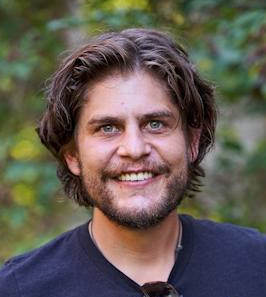
Bernhard Altaner studied physics and mathematics in Konstanz and Cambridge, and earned his PhD in Göttingen on the foundations of stochastic thermodynamics. His research covers information processing in complex systems, from the molecular to the cosmological scale. He currently works on smart energy management systems, and on what AI research can teach us about universal features of agentic information processing in the brain, including their relation to consciousness. He lives in Ulm, Germany.

Debsankha Manik studied physics at IISER Kolkata, India, and earned his PhD in Göttingen on the dynamics of complex flow networks. His work on on-demand mobility spans academia, within large publicly funded research projects, and industry, including the Volkswagen-owned startup MOIA. He has developed core algorithms for the on-demand transport of people and goods, and has worked with public transport agencies in Lower Saxony, Leipzig, and Munich. He lives in Hamburg, Germany.
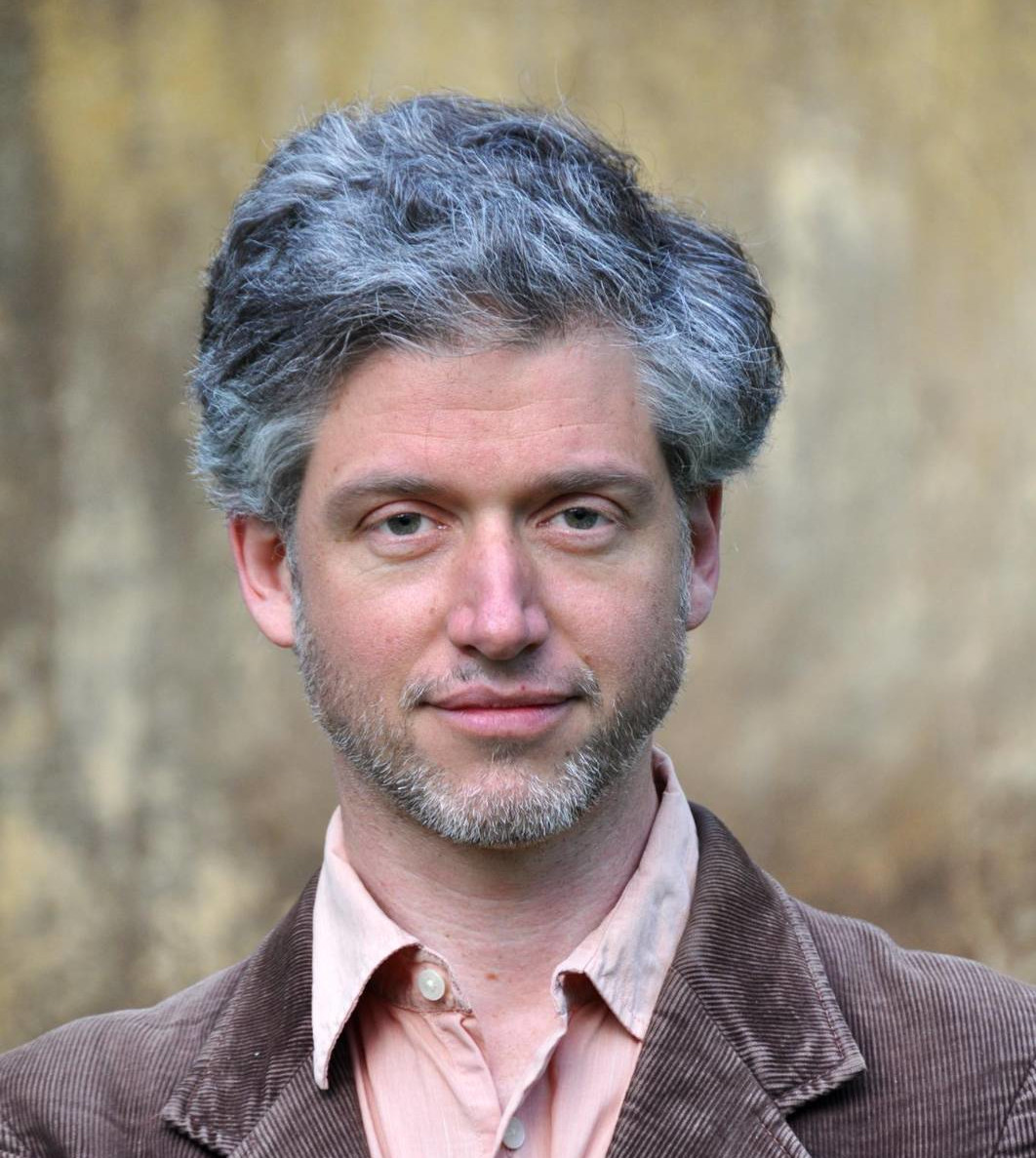
David Hofmann studied physics at the Technical University of Munich and earned his PhD in Göttingen in computational and theoretical neuroscience. He held postdoctoral positions in the United States, including at the MIT Computer Science and Artificial Intelligence Laboratory. His research covers the neuroscience of decision making, machine learning, and the stability of ecological networks, and he now leads the institute’s work on economic modelling. He is a founder of Climate Action South Tyrol, a civil-society alliance of over 80 member organisations, and co-coordinator of the annual sustainability conference Toblacher Gespräche / Colloqui di Dobbiaco. He lives in Bressanone/Brixen, Italy.
If you are intrigued by what we do, reach out to learn more: david.hofmann@mytum.de